


No, I didn’t mean you could probably not care less about hearing from me again after all this time. I meant that you probably could afford to care less about whatever troubles you day to day.
If I’ve learned anything over the past year, it’s that unconditional love does not equal unconditional care. Because while love is limit-less, care has a capacity, and if we’re not careful, it’s easy to end up in a life where we ourselves receive the smallest share of our own care.
This is all built around the illusion that caring for other people’s problems makes you a good person — even if that care never extends to any sort of action outside of virtue signaling that you’re aware of them.
As if having “Free Palestine. Free Sudan. Free Congo. Stop global warming. Stop Asian Hate. Black Lives Matter. Save the trees. Save the reefs. Save the turtles,” in your instagram bio is doing anything to truly liberate the beings who are suffering injustice. “Oh but I’m raising awareness!” — for who? Other people on social media who, almost assuredly see the same posts that you do? Other people who also can’t or won’t take any direct action towards changing these situations? Because, I assure you, those who do have direct access to make a difference are already doing so.
Our ability to help someone is directly correlated to our proximity to them — physically, mentally, emotionally, and spiritually. And that’s why it blows my mind when people stateside make another country’s problem their entire personality. It seems like a convenient way to deflect because there are so many problems in the U.S. that need addressing and, it would seem, if these people were truly concerned about relieving the suffering of others, they’d start with those closest to them since those are the ones they’re most likely to reach.
We like to imagine that just knowing about someone else’s suffering somehow helps them carry the burden. And it’s a convenient belief — one that I think deserves a lot more interrogation than we typically afford it.
If I told you that I’d experienced suicidal ideation over the past year, I imagine some reading this would truly care. A smaller group might actually reach out and offer words of comfort — but they’d fall on deaf ears. Because no one out there could help me carry what it is that led to those thoughts — no matter how deeply you care. You could say, “Micheal, I can’t imagine how much pain you’re in — but I care about you.” And that’d be nice to hear — but it wouldn’t take the pain away. The biggest difference it’d make is that now, instead of only one person suffering, two people are.
And that’s truly the folly of careless caring — it actually increases the amount of suffering in the world: the people who are suffering the pain of the heartbreaking experience and the people who are suffering because they can’t change what others are going through.
‘So what should we do then, Micheal? Ignore the atrocities affecting others and live in ignorant bliss while they suffer?’
I think that’s the other end of an extreme that’s also not very useful. But there’s a middle ground: understanding that suffering is fundamental to life and living our lives in a such a way that we reduce suffering for all — ourselves included.
I do not need to know about every specific injustice to know that injustice is happening all the time. And, in my opinion, the best thing I can do about the general injustice in the world is being a kind, compassionate, patient, fair, and helpful person to all people I encounter. I guarantee you that will do much more to positively affect the world than spending hours scrolling a timeline, literally designed to manipulate your emotions, and remaining in a constant state of fear and dis-ease, that you will inevitably project out into the world you so desperately want to help.

I’m not at all saying that you shouldn’t check in on your friends and attempt to be someone they can lean on. I’m not at all saying that you shouldn’t donate money or time or energy to any cause that truly resonates with your heart.
What I’m saying is that we often overestimate what care alone can change. What I’m actually saying is that no one can care about everything — and that by trying to, you’re making yourself less effective at creating change that would actually be meaningful.
We imagine caring as being an objectively “good” thing — but care alone, without action, is neutral, at best. Care, without direct action, has the same overall effect on a situation as not knowing about it at all.
If you can’t or aren’t directly acting on a situation, your care alone will not change its outcome. Instead, it will only drain you of valuable energy you could be placing elsewhere — like in creating a joyful life for yourself.
So it’s not that I don’t want you to make a difference, it’s that I do — I just want you to start with a life your care certainly has the power to change: your own.
are we clear?
Questionable (Morals)
A few years ago, I would do this thing called “Moral Dilemma Mondays” on my instagram story where I’d share a moral dilemma and ask my community to vote on what they’d do. I’ve always enjoyed moral dilemmas because I feel like most people never truly interrogate their morals. Instead, they adopt them from their family or the environment they grew up in. I’ve spent years writing things that ask you to look at yourself differently — now I’m building things that intend to do the same thing in a much more interactive way.
Questionable (Morals) is a mirror. It’s the first offering in a developing suite of self-inquiry tools, intentionally designed to help you connect with your own moral compass. It shows, it doesn’t tell. There truly are no “right” answers, even when what’s correct seems glaringly obvious.
Like belief systems, I believe that morals are largely inherited and unexamined. This is why our morals feel so “black” and “white” — because we’ve never been invited to interrogate them.
I built this application for just that purpose — to reveal that morality and humanity are both a lot more grey than we may like to acknowledge. To expose that grey area to be examined — because accepting that grey area is integral to seeing ourselves clearly.
Ten dilemmas. No ‘right’ answers — just the uncomfortable truth. Cast your vote and watch as the scales reflect how your morals compare to everyone else’s. I’ve put a ton of work into this app and can truly envision it developing into a self-inquiry suite. It’s currently in beta and I’d really appreciate it if you’d go and give it a try. Some screenshots of example dilemmas are below, and you can check out the full quiz by clicking the button under the images.


are we clear? & Housekeeping Items
You may have noticed that this email looks a bit different than past newsletters and that’s for a couple reasons:
I’ve migrated from using Ghost as my newsletter platform to Substack
Grow with Micheal Sinclair has been retired and archived
I decided to migrate from Ghost to Substack for a simple reason: Substack is where readers hang out. So I feel there’s a much better chance of grounding a real community here.
Micheal Sinclair is not done growing — but it does feel like I’ve graduated beyond the “growth” era of my life and, now, my primary concern is seeing myself and helping others see themselves more clearly. Hence the name of this publication — are we clear?
From are we clear? you can expect newsletters very similar to this one: short(er), sharp, and to the point. Perhaps with a bit more friction than my earlier writing because the purpose of this newsletter is polishing the mirror — and polishing requires our rough spots to be rubbed. Also, don’t worry, the full Grow with Micheal Sinclair archive is currently being migrated to Substack, so it’s not lost forever.
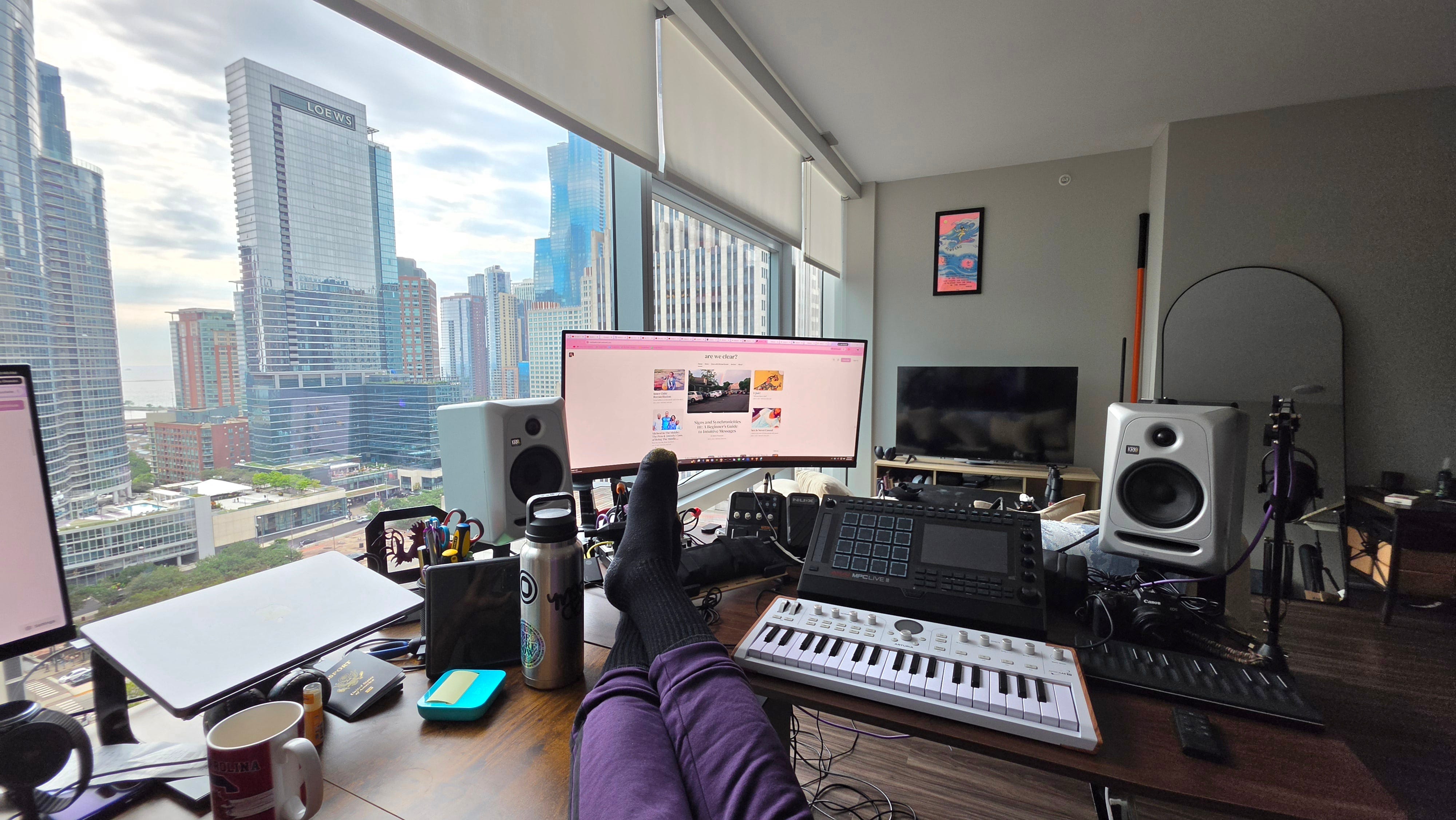
Also, also, I know it’s been a long time since you’ve heard from me. A lot has happened over the past year and a half. The most major highlight is that I’ve moved to Chicago and it genuinely feels like my mother brought me here. Not just to this city, but to the very apartment I’m currently writing this from. It’s a long story but you can check the IG post linked in the prior sentence if you want a summary. Otherwise, I’ll share bits and pieces in upcoming newsletters because I’m determined to keep are we clear?’s newsletters short and sweet.
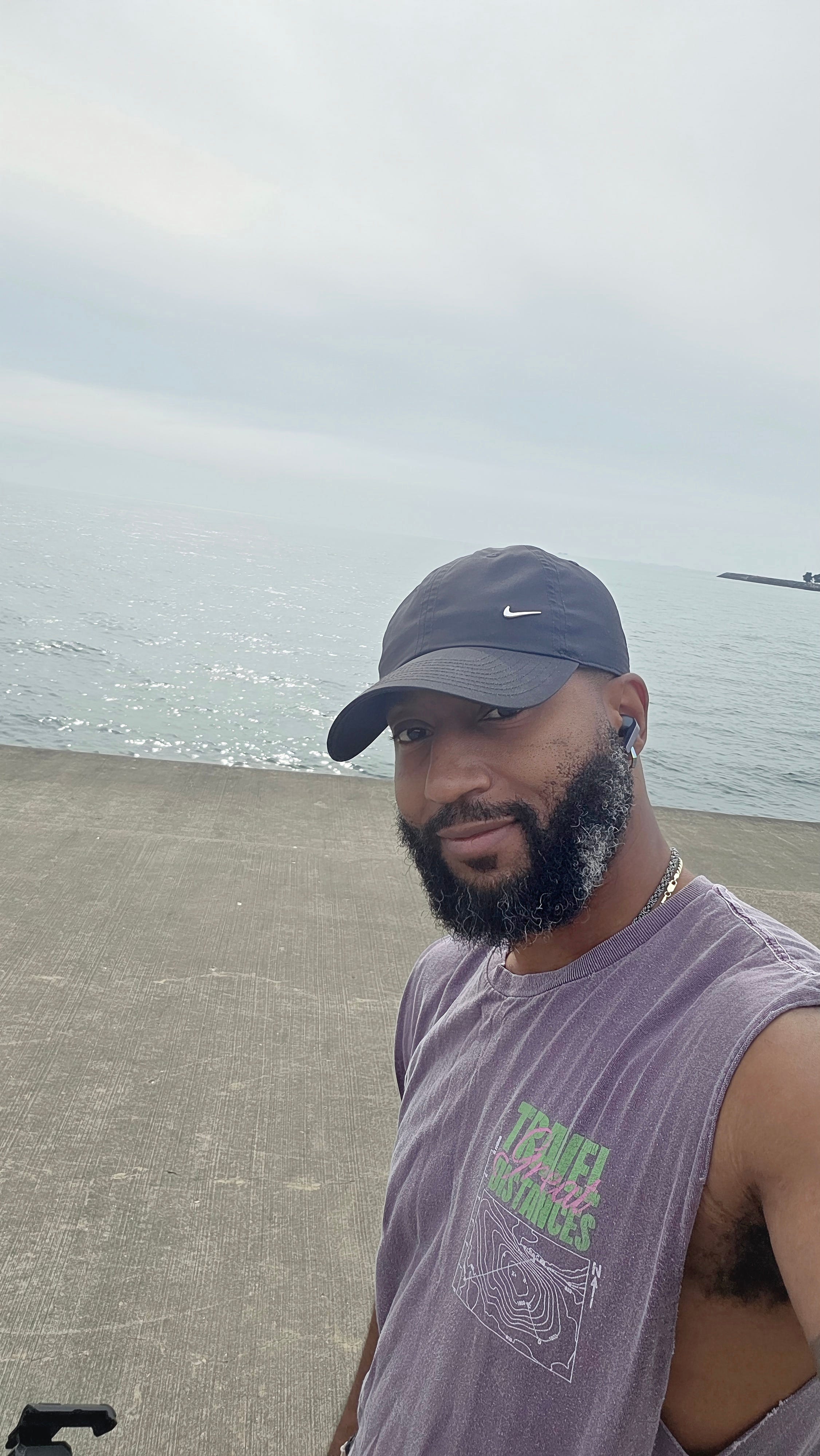
But I am doing well. Physically I’m more secure and stable than I’ve been in a long time. Spiritually, I’ve been getting my ass whooped — and that bit hasn’t changed much since the last time we spoke. I’d love to share more about that, and will at some point, but for now I don’t feel like I’m at liberty to speak about it earnestly.
Nevertheless newsletters are back, and I hope you’re still interested in hearing from me. Of course, if you’re receiving this and don’t know why, it’s probably because you subscribed before — but feel free to unsubscribe if we’re no longer aligned.
I’m truly looking forward to sharing this space with you again.
With love,
Micheal Sinclair 💜