


I’ve been told by people before that I’ve healed them, but I would never feel comfortable calling myself a ‘healer’ because I know it’s not me who has actually brought about the change in another. All healing is self-healing; the best that a good healer can do is help to create an environment that encourages, supports, or sustains the healing that needs to take place. Take a cut, for instance: the alcohol you use to clean the cut doesn’t heal the cut at all — what it does is clear the environment of potential hazards that might thwart the healing process. The bandage you put over the cut also does nothing to heal the cut — what it does is create a barrier between the open wound and things that might agitate the wound. The same goes for a broken bone; the cast placed on a limb that has been broken will do nothing in itself to mend the break between the parts of the bone. All the cast does is create an environment that makes it difficult, if not impossible, for the healing of the bones to be disrupted, but the healing of the bones will happen automatically.
Healing is facilitated by the greater intelligence. You can call this intelligence ‘nature,’ ‘God,’ ‘the Universe,’ ‘Spirit,’ or ‘the Self,’ but regardless of what you refer to it as, it is this universal force that mends our broken bones, our broken hearts, and our broken spirits. This force is always working to bring balance and equanimity where it is lacking, and all we ever need to do to call in this healing power is create an environment that will support it. In fact, the reason why healing seems so elusive to many of us is that we either refuse to or don’t feel empowered enough to change our environments. It is impossible to heal in the same environment that hurt you because that environment will continuously reopen and re-aggravate your wounds before any healing can take place. This is why, when we’re serious about healing, the first thing we have to do is take an honest audit of our environment and identify precisely what inside of it is causing us pain. Once the pain has been identified, our environment must be altered in some way, be it physically, mentally, or emotionally, so that the process of healing can begin.
To Go Far You Must Start Near
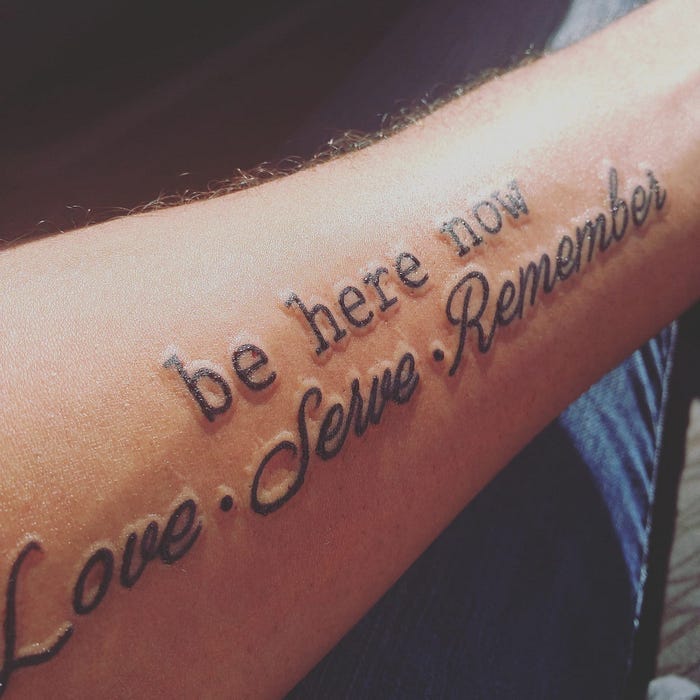
About a year before my mother passed on, her and I fell out. It was around Christmas & I was home visiting her from Oklahoma City, where I was living at the time. We went out to lunch one afternoon and after seeing my new tattoo, she sarcastically asked me “why did you put that ugly thing on your skin?”. My mother was never shy about sharing her opinion about things that I did, wore, or thought. Growing up, I was often told by her that the clothes or shoes that I’d bought for myself were ‘ugly’ and was questioned as to how I could like such things. She often told me that I needed to cut my hair or shave my face or do something else to look more like the person she wanted me to be, as opposed to the person I was showing up as. And it’d honestly always gotten under my skin, though I’d usually do my best to brush it off and just move on because that’s just how she, and most people in my family, were. I don’t know if it was because of her sickness and the heightened emotionality it invoked in me, but for whatever reason, in that moment at lunch, I decided to let her know just how much I didn’t appreciate always feeling judged by her for expressing myself the way I wanted to. Ever since I left home for college at 18, I rarely came back to visit, usually only for major holidays or birthdays, and I told my mother that the main reason I didn’t come back home that often was because I always felt judged and put down by her. I could tell that hearing this bothered her because she immediately got defensive, but I wouldn’t find out just how much it bothered her until a few days later.
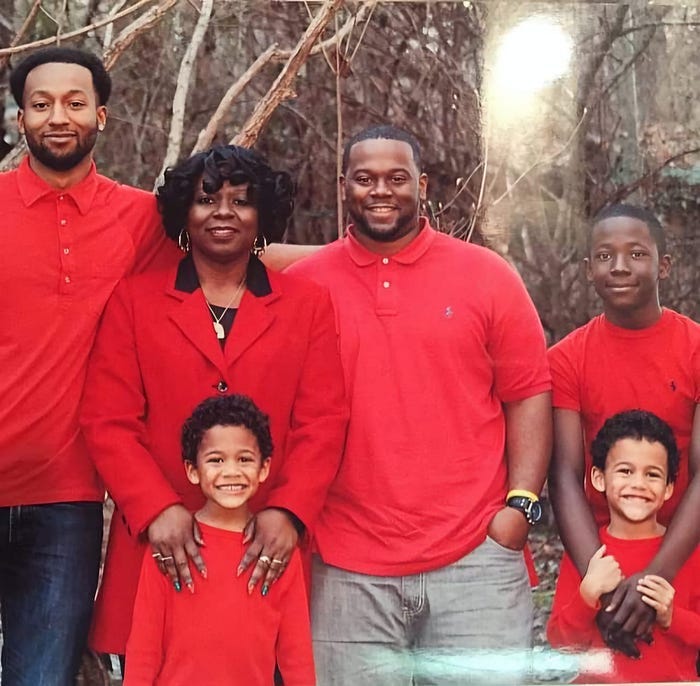
I noticed she wasn’t talking to me as much as usual, but at first, I chalked it up to her just not feeling well. She’d orchestrated for us to have a family Christmas photo shoot, and I couldn’t help but notice that she didn’t really seem to want to be around me during it. I was less attuned to energy back then than I am now, but even then, I could tell how she was open towards everyone else and closed towards me. My suspicions were confirmed later that night when my brother called me and said, ‘hey man, you know mama’s mad at you?’ I asked him why, and he said he didn’t know but he had just talked to Granny (my mom’s mom), and Granny said my mom had told her that I’d hurt her feelings. This obviously made me feel horrible. I’d never want to hurt my mom’s feelings, especially not while she was fighting cancer and dealing with the physical, mental, and emotional toll it was taking on her.
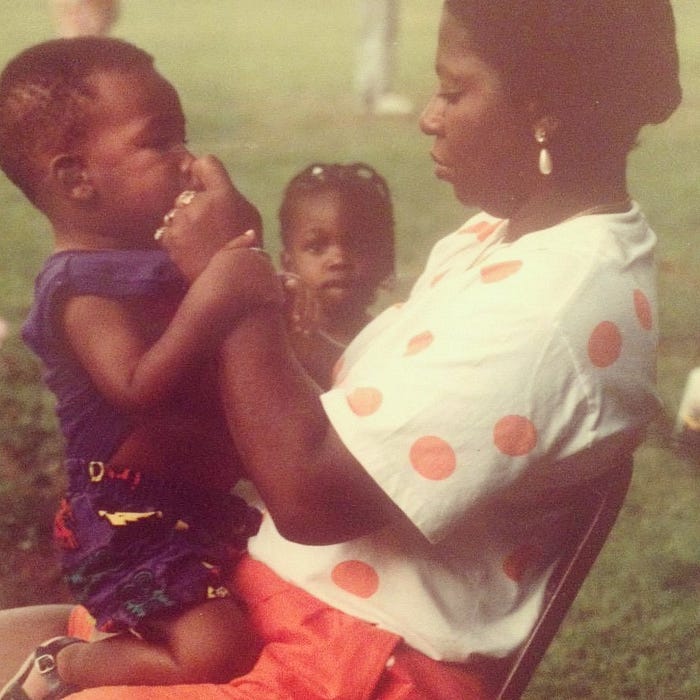
My mom was a bit of an enigma emotionally. She had a very tough and hard exterior, likely due to her rough upbringing in the same Marcy projects made infamous by Jay-Z. She seldom showed happiness, joy, or humor and was usually very serious; focused on overcoming whatever strife she was facing at the moment. She had a reputation in our family, even amongst the men, as not being someone to play with and I can say from personal experience that she was definitely not one for games. My very first memory is of my mother holding her eye after being hit by my father, and for a long time, I resented him for it, labeling him a ‘woman beater’. However, I learned later in life from my Granny that my mother and father used to fight consensually — that it wasn’t a one-sided affair and that she often initiated the physical confrontations. She even used to say herself, “A woman should never raise her hands towards a man unless she’s ready to fight.”
We never talked about our feelings as a family, so I think it’s fair to say that, for the most part, she was always pretty emotionally closed off. But at the same time, she could cry in a heartbeat. She used to love to watch heart-wrenching shows like ‘Crossing Over with John Edward,’ where John Edward, a psychic medium, would connect people with lost loved ones, or ‘Extreme Makeover,’ where people who were ostracized or overlooked for most of their lives due to their appearance were transformed and given a new lease on life. Watching these shows would regularly move her to tears — it was like they provided her a way to process her own pain vicariously through others. This behavior foreshadowed a realization I gained about both my parents later in life: though externally they were both determined to portray toughness and resilience, on the inside, they were big softies. The sensitivity that I felt inside and was led to believe was something I suffered from alone was actually something I inherited from them.
After gaining confirmation from my brother that my mother was mad at me, I confronted her about it. I don’t remember exactly what was said, but I do remember there were a lot of tears flowing from both of us. I remember her admitting that it hurt her when I said, ‘I didn’t like to come home because of her,’ and me clarifying that what prevented me from coming home was not her, but rather, how she often made me feel through her judgments of me. I remember telling her that all I ever wanted was for her to be proud of me and that she had never told me she was proud of me, whether she felt it or not, but would regularly tell me what she didn’t like about me. She told me she was proud of me that night. And I told her how much she meant to me. We both apologized for hurting one another and then embraced each other in a way that we hadn’t since I was a little boy. I remember feeling like a little boy again who just wanted to be loved and admired by his mama and who, in that moment, did feel loved and admired by her again. And from that point on, we were closer than we’d ever been before.
Something’s Got To Give
This healing between my mom and me was made possible only by changing my physical and emotional environments. Moving 1,000 miles away to Oklahoma allowed me to heal from the constant criticism I used to feel at home and grow a love and understanding of myself, for myself, that was not influenced by the opinions of my family. Changing my physical environment showed me that it was possible for people to love me just as I am, and that not everyone would see my personal style as ‘ugly’ but, on the contrary, would celebrate it. Moreover, in Oklahoma, I met people who exposed me to yoga and other mind-opening “things”(👀) that drastically evolved my emotional landscape by granting me a higher perspective and allowing me to see myself, my mother, and the world around me in a totally different way. I would have never got into meditation and yoga had I not had to face the heartbreak of learning of my mother’s cancer diagnosis over the phone and, because of it, seeking a way to process her mortality on my own.
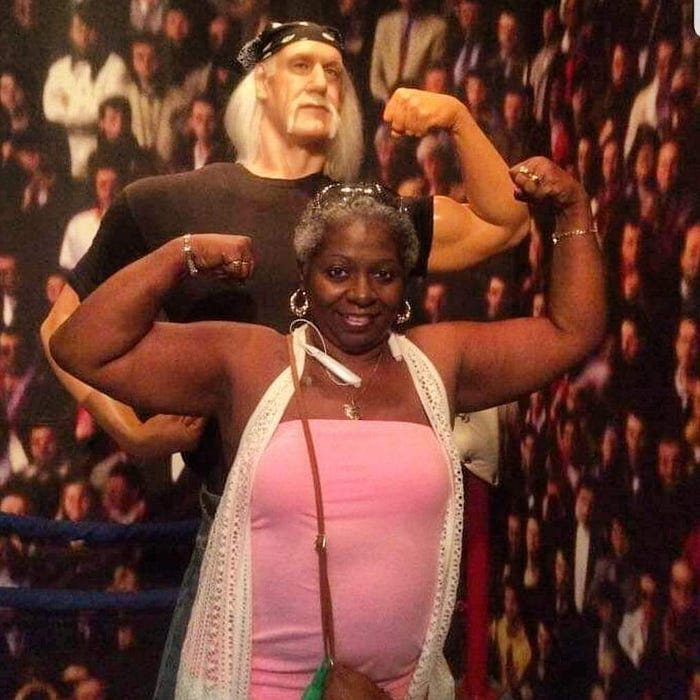
My mom getting cancer changed the emotional environments within us both. It caused a tenderness that made it impossible to continue to hide the deeper feelings we had for each other within. I remember taking her to the cancer center once after I’d moved back east to help take care of her. During her check-up the doctor asked her if she was feeling depressed and, though I could tell it was uncomfortable for her to admit it in my presence, she admitted that she was. I’m 100% sure my mother had struggled with depression for most of the time that I knew her, but I don’t think she would have ever admitted it without cancer wearing down her emotional walls. During that same trip to the cancer center, I remember getting back to the hotel room and watching her lay down on the hotel bed where she started to cry due to the pain she was in. I laid down beside her, held her, and cried with her — something I’m sure would have never happened had cancer not totally shifted both of our emotional landscapes.
The pain we were both feeling allowed us to transcend the roles of ‘mother’ and ‘son’ and all the wounds we caused each other by being attached to those roles. Instead, in that moment, we were just two beings who loved each other deeply and who were sharing in suffering. She and I being able to speak truthfully about our feelings towards one another for the first time ever changed our emotional environment because I no longer had to hide the fact that my mother’s harsh judgments about the way I expressed myself hurt me. And she no longer had to hide the fact that not feeling physically, mentally, and emotionally close to her child hurt her. We were able to heal our connection only because the environment that created the distance between us no longer existed. And it was replaced by an environment that fostered intimacy, authenticity, and most importantly, healing.
I recognize that we can’t all physically leave the environments that have hurt us and don’t mean to imply that doing so is always necessary. If your parent or child or partner hurts you, the environment that may need to change in order to heal that pain could be entirely emotional, as opposed to physical. This is why it is said that the best apology is changed behavior because, through changed behavior, a person is illustrating that internally, something inside of them has changed. In cases where it’s impossible to change your physical environment or the internal environment of another, you always maintain the power to change the emotional environment within yourself. Meditation taught me that there is a safe space, a sacred space, inside us all where we can retreat to in order to heal when everything in the external world is causing us injury. Life is experienced from the inside out, and though we are never in total control of what happens to us on the outside, we do have dominion over what goes on inside of us. And I hope this newsletter has empowered you to change your environment, be that physically, mentally, emotionally, or all three, in a way that will support your healing and growth.
Thank you for sharing your story. I do agree that environment plays a central role in healing. I used to spend a lot of time on the internet diagnosing myself with anything that felt like it fit. Bottom line. I was depressed. Being a part of that family meant fitting into a role. I tried. I just couldn't get it right. It's been about a year since I left that house and minimized contact. I have bad days. But I'm now able to dream and feel excited about life. And play. And allow my mistakes to be that. Mistakes. So in my case, it was the physical distance needed to allow my mind to develop without being forced in one direction.