


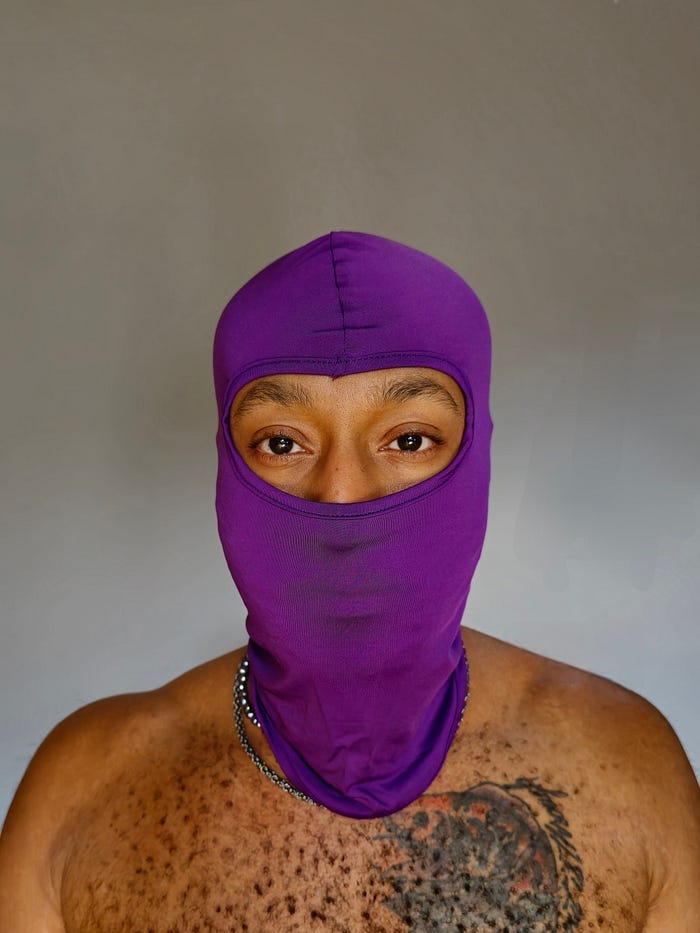
No Face, No Case
The Japanese say we have three faces; the one we show to the world, the one we show to our family and friends, and the one we never show anyone outside of ourselves — the last one being the truest reflection of who we are. What this tells me is that we don’t actually have three faces, we have one, and the “faces” we show to everyone outside of ourselves are actually masks. Just like criminals, the reason why we wear masks is because we are afraid to reveal our true identity. Unlike criminals, revealing our true identities would likely not lead to jail time but it would bring consequences all the same & the scariest consequence of them all for people is that of being judged. So, we wear masks, not just to navigate social dynamics and to fit into societal roles, but also to protect our one true identity. Because subconsciously, if one of my masks gets rejected from a job, or a relationship, or a community, it won’t hurt as bad because I can convince myself that it wasn’t the real me that got rejected.
I truly can’t stomach it the way I used to, but I once enjoyed listening to drill music. Drill music is music that is centered around drilling — or killing — the opposition. Though the music itself is often dope, the sentiment behind it & the culture it has created troubles me. Especially because the performers of this music typically look like & come from the same sort of background as me. A common saying by the performers on these drill songs is “No face, no case”, meaning that if they get you while masked up, they won’t have to face any consequences. If no one sees who they truly are, they can’t be held accountable. And I’ve found that we wear masks for the same reason. Because it’s much more comfortable to wear a mask and pretend to be someone we’re not in order to be accepted than it is to reveal who we actually are and run the risk of being judged for, or held accountable for, not being as pretty as our masks portray us to be. Or in the case of these drill rappers, not being as tough or hard as they portray themselves to be.
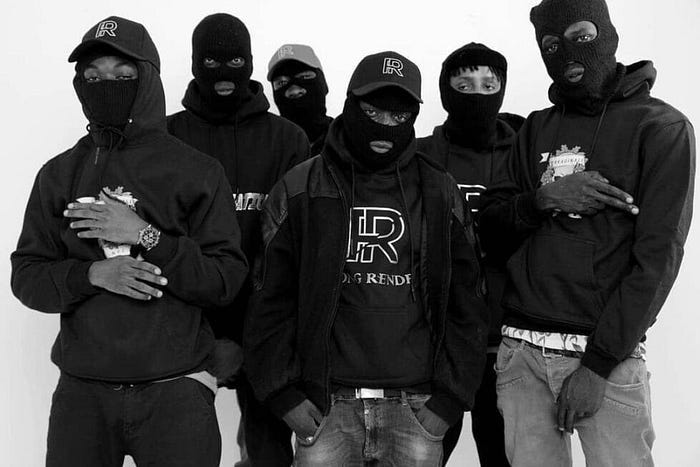
The truth about anyone who is attracted to a gang is that they’re likely afraid and feel vulnerable and what they’re seeking in the gang is a sense of protection and stability. The gang itself is a mask because, whether we’d like to admit to it or not, we all want to be accepted by and supported by society. The gang is a mask that projects to society: “We don’t need you, we don’t care about belonging, and we don’t care about being protected,” when in reality, the opposite is true. This creates a culture where young men spend most of their time hiding — from the law, from their parents, from their friends, and, most damagingly, from themselves.
I know this first hand as a Black man who used to be a Black boy who romanticized gang life. The most appealing part about joining a gang to me was becoming “unfuckwittable” — that is, belonging to something so intimidating or powerful that no one would dare try me. Of course, this desire was rooted in the fact that internally I felt super vulnerable. Super sensitive. Super afraid. And so, I desired to wear the mask of a thug because I felt like it would protect me. In order to put myself in a position to no longer be hurt, I had to project an image of being someone with a willingness and a desire to cause hurt. And I see myself in the eyes of many of these little black boys who have put on masks to become the boogeymen that society expects them to be. It’s a vicious cycle; blackness is dehumanized, leading to ostracization, exploitation, and being forgotten. This results in feelings of hurt and victimization, which drives masking and becoming the victimizer. Sadly, when we wear masks long enough, we eventually forget that they aren’t who we truly are. And although I don’t have the space to dive into it in this piece, I see much of Black American culture as the product of having to mask ourselves and appear superhuman to compensate for a society that has been committed to making us feel less than human since America’s founding.
The Clothes Make the Man
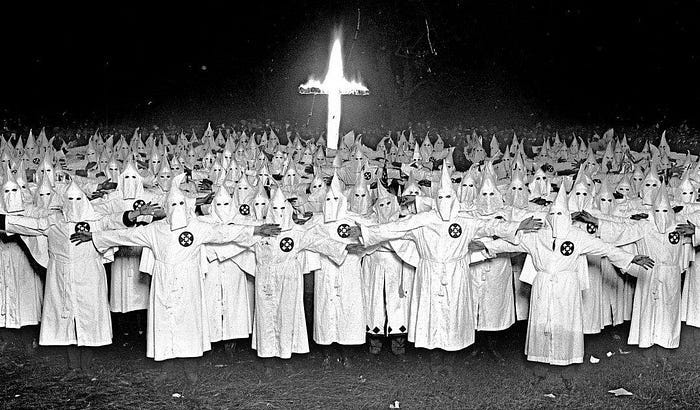
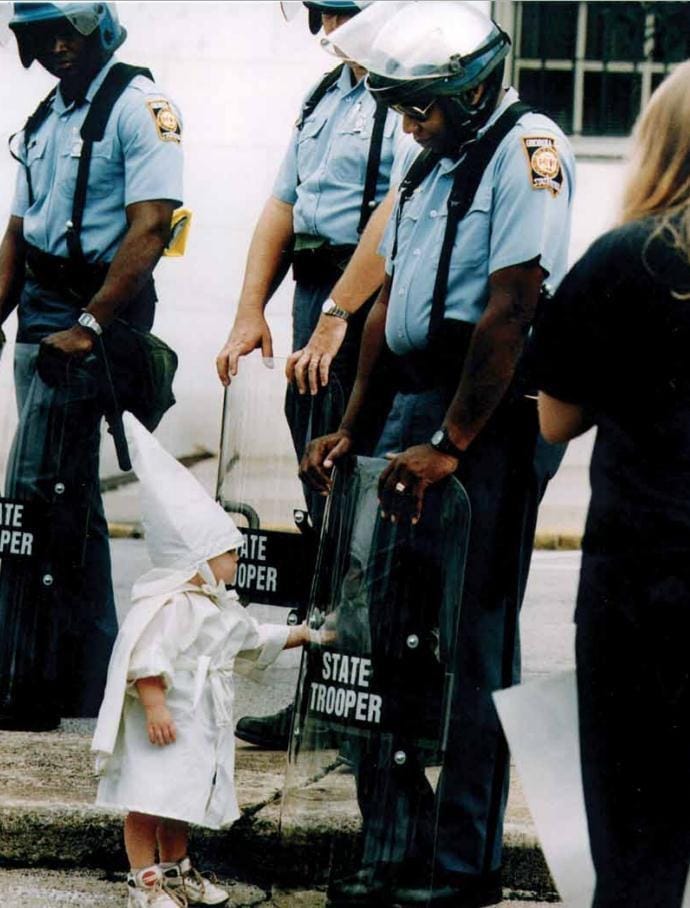
One of the most famous masks in American history is that of the Ku Klux Klan. Members of this gang wore masks not just to hide their true identity but also to intimidate and instill fear in the people they wanted to terrorize. I’m not quite sure what it is, but there’s something particularly unsettling about these pointed white masks — something haunting, which I’m sure was intentional. Because the goal of the Klan was not only to physically harm those they viewed as enemies but also to mentally manipulate them into believing the Klan’s power was supernatural. War is fought on every plane of reality, and since the dawn of humanity, humans have used masks to try and defeat their enemies mentally before any physical blow is struck.
That introduces another reason why we wear masks: they allow us to become someone we’re not, empowering us to act in ways we wouldn’t feel capable of without them. And cowards, like those who join the Klan or other gangs, value intimidation because it grants them a power to manipulate others that they simply don’t have without the mask. We’re taught that racists and terrorists are fueled by hatred, but in reality, they’re motivated by fear. White supremacists are not driven by hatred for those who aren’t like them; instead, they fear that those who are different might someday cause them — or their power — to disappear. The difference may seem subtle, but it’s critical. Because it transforms the mask wearer from an imagined supernatural monster with extraordinary destructive power into what they really are: a hurt, confused, scared little child misbehaving out of fear.
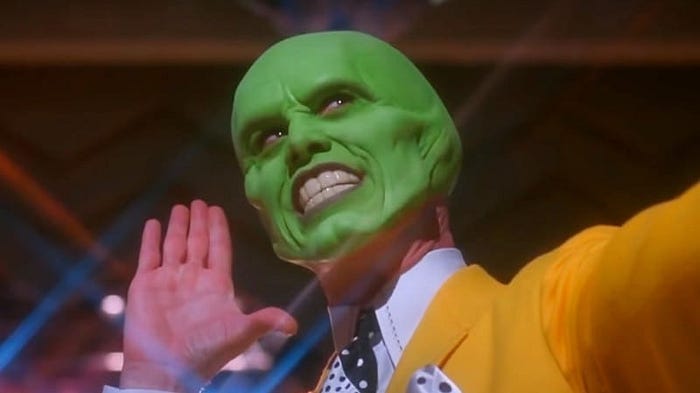
A great example of the power masks hold in transforming our sense of self can be seen in the movie “The Mask,” a childhood favorite of mine. In the movie, Jim Carrey plays Stanley Ipkiss, an awkward, timid, and often ridiculed bank teller who feels he has little choice but to accept what life has given him. That is, until he stumbles upon a magical mask possessed by Loki, the Norse god of trickery. When Stanley puts on this mask, he transforms into a character who is the opposite of who he is without it — charming, charismatic, funny, commanding — and uses his newfound powers to torment people he’d never have had the confidence to confront without it. To understand the mask’s power, Stanley seeks the advice of a psychiatrist who’d published a book on masks. The psychiatrist explains that the mask’s personality is just a reflection of Stanley’s true, repressed desires.
I can relate to this story in many ways, but instead of a lime-green mask that physically changed my appearance, my mask was more subtle. Genetics and the grace of God gifted me with a face and height that were considered desirable in my later teen and young adult years, a stark contrast to the undesirable little boy I felt I was on the inside. This metaphorical mask gave me the power to fulfill my repressed desire to be desired, leading to behaviors that were destructive to myself and those around me. This distorted sense of self was something I could only overcome through the grace of tragedy, which caused my mask to slip, allowing me to see who I truly was again.
A mask doesn’t have to exclusively cover a face; masks can also cover the body. I view the uniforms of police and the robes of priests as masks that project an image often misaligned with reality. The police uniform suggests bravery, service, and trustworthiness, yet we’ve seen repeatedly that this isn’t always true for many who wear it. Similarly, a priest’s robes imply purity, truth, and care, but often don’t reflect the true nature of the person wearing them. Men mask with muscles; women mask with makeup. Both genders mask by posting only the highlights of their lives on social media to create the impression that they’re winning at life. The concepts of “fake it till you make it” and “dress for the job you want” both encourage wearing a mask until you hopefully embody what you believe the mask communicates. While this advice might be well-intentioned, it contributes to a culture of inauthenticity, where appearing successful is more valued than actually being successful. Looking like you have money is more valued than having money. Looking like you have a happy family is valued more than actually having one. Hell, somehow looking happy in general is prized more than truly being happy. We’ve collectively fallen in love with an mirage, an illusion that, while comforting on the surface, has led to a deep sense of unfulfillment in our collective consciousness — one that inevitably manifests as conflict.
Who’s Behind The Mask?
I hope my overall tone throughout this post doesn’t make it seem like I believe that masks are inherently a bad thing because I don’t think that they are. Sometimes, masks are necessary. The fact is, we live in a dangerous, unpredictable, often cold world, where showing up as your most vulnerable self 100% of the time could cause more harm than good. The truth is, taking off your mask does not guarantee you will be seen. And, to be frank, not everyone deserves to see the treasure of who you truly are. My theory is that many of us wear the masks we do because, at some point in our youth, we showed someone we cared about who we really were, only to be punished, ostracized, or ridiculed for it. So, it’s no wonder so many of us are reluctant to reveal our true selves as adults. I’ve spoken at length about how feeling rejected for being sensitive as a child led me to mask as someone who didn’t care about others’ feelings as an adult. And I’m willing to bet that if you were to find the root cause of why you wear the masks you do, it would trace back to an experience you had in adolescence as well.
I do feel that it’s crucial to connect with people around whom you feel safe being your true self. If you feel the need to wear a mask around family or friends, the reality is that they are family and friends in name only. I’ve met several people with whom I feel comfortable enough to show most of myself, and I’m grateful for that. But, honestly, I can’t say I’ve ever felt safe enough to show who I am completely to anyone. Even while writing this newsletter, I’m in a way masking as someone who knows what he’s talking about when, in reality, I’m just finding my way like everyone else. The truth is, I don’t know everything — I have many theories, many ideas, and I’ve done many experiments that yielded results I feel confident in. But deep down, I’m often as lost, confused, and disempowered as anyone else. This mask of being a healer or a teacher or a guide betrays me because people often assume I don’t need to be healed, taught, or led. I won’t say my strength is a mask because I am strong, but there are times when I don’t want to be strong, and it would be amazing to feel safe enough to be vulnerable and let someone else be strong for me. And though I am open about my sensitivity, in a way, I still mask as invulnerable because it’s incredibly hard for me to trust or rely on others, even though I know I need to.
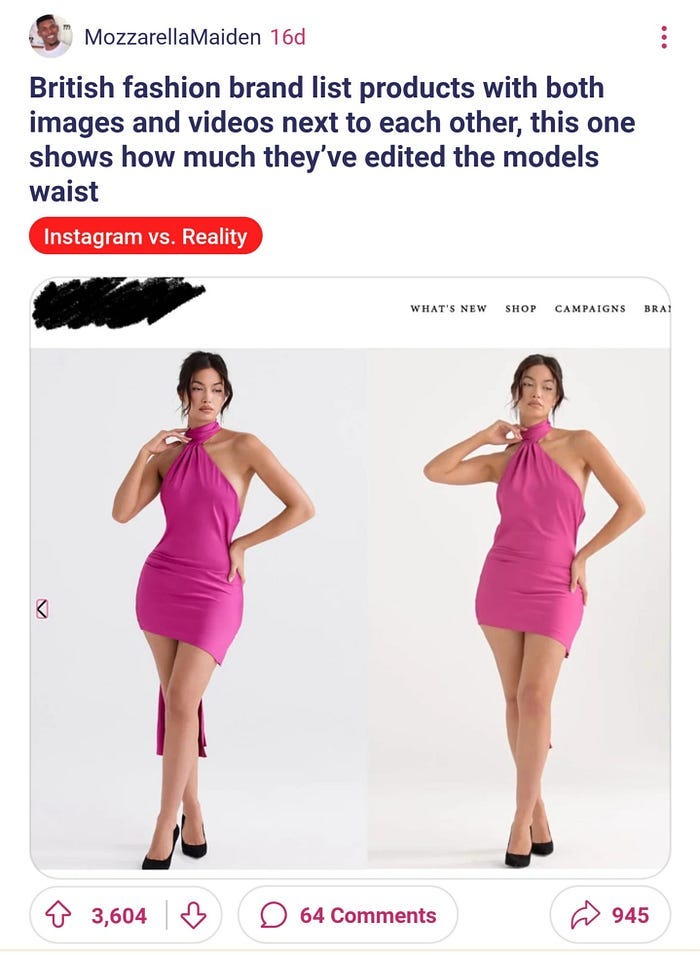
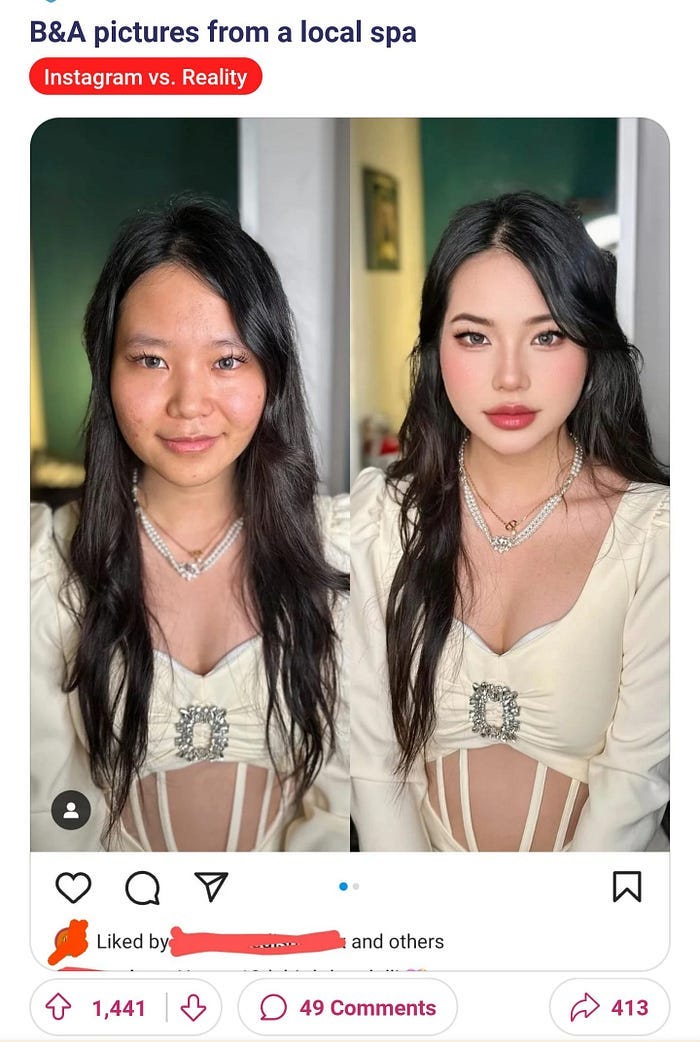
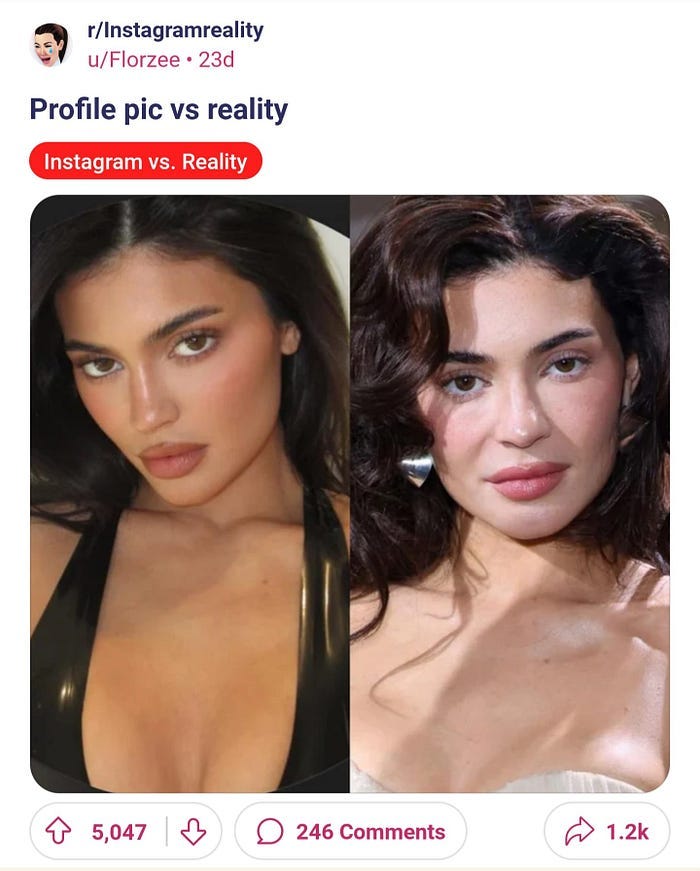
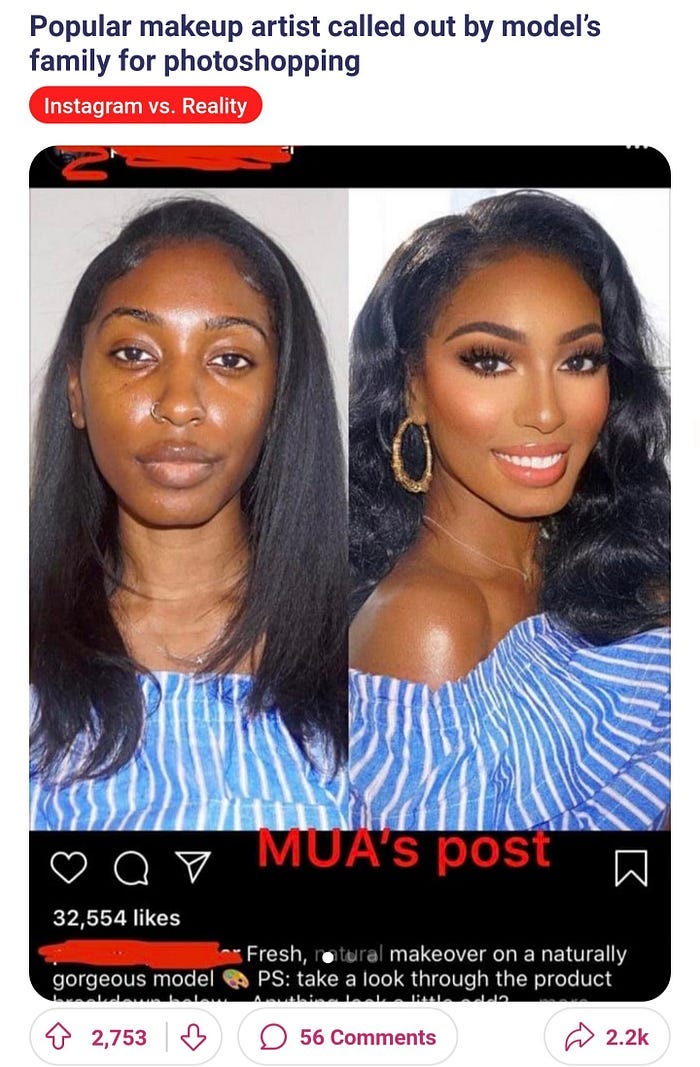
Screenshots from the r/Instagramreality subreddit — subreddit dedicated to exposing the rampant editing that takes place on social media images to help people feel more grounded in reality.
So, my closing message when it comes to masks is not to discard them entirely, but to use discernment when deciding whether to wear them. Understand fully when and why you are wearing a mask, and spend time each day connecting with your truest inner Self so you don’t lose your actual identity in the role that your mask has you playing. I see life as a drama, anyway. We’re all wearing masks. We’re all wearing costumes. We’re all Spirit cosplaying as human beings in the grand play of life. As long as you know yourself and stay consciously connected to the Spirit within, it can be enjoyable to wear a mask, play a role, and experience all the positive and negative emotions that come with the illusion of separation.