


A Random Encounter
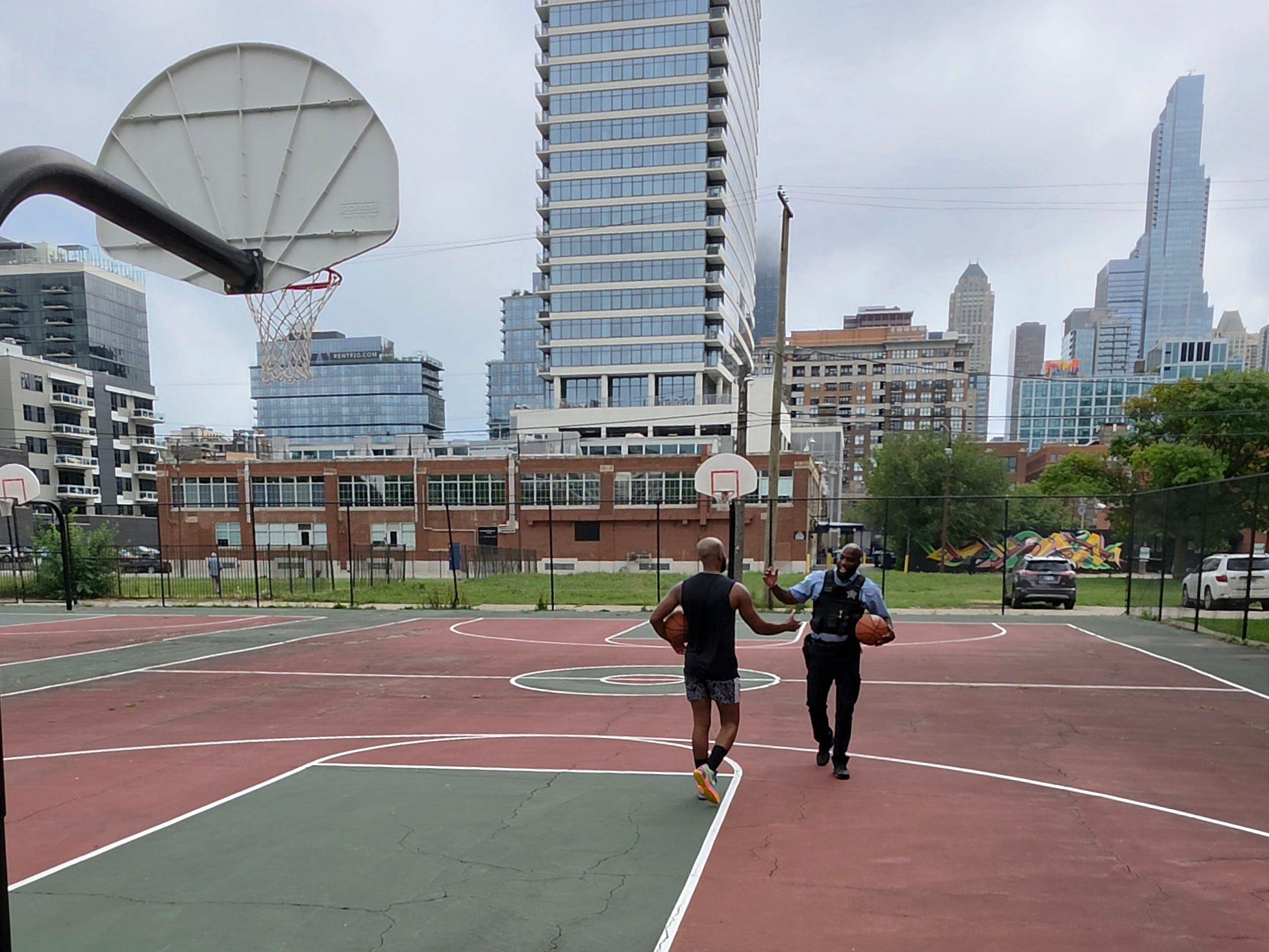
Yesterday I pulled up to the neighborhood basketball court to get a little workout in when I was approached by a cop, a Black cop, who asked me to play H.O.R.S.E. with him. I was honestly a bit hesitant to agree. My overall sentiment toward the police has definitely changed over the years, but to say that I hated them at one point would be an understatement. Back in 2014, witnessing Mike Brown being shot dead while unarmed by a police officer and his body left to cook on the hot concrete for hours fundamentally changed me. You see, my name is Micheal too — I was a rebellious 20-something Black young man too — and that easily could have been me dead on the road instead of him. From that point on, cops of any color became enemies in my mind.
That was over 10 years ago, at this point, and both my views on policing and who I am have certainly evolved since then. I still don’t like cops, per se, but I also understand the necessity of them in this game we’re playing. I feel that, for the most part, the issue many of us have with police isn’t that the individuals themselves are truly bastards at their core but that the role they play grants them more power than the rest of us have. And power has a way of corrupting even the most well-intentioned among us.
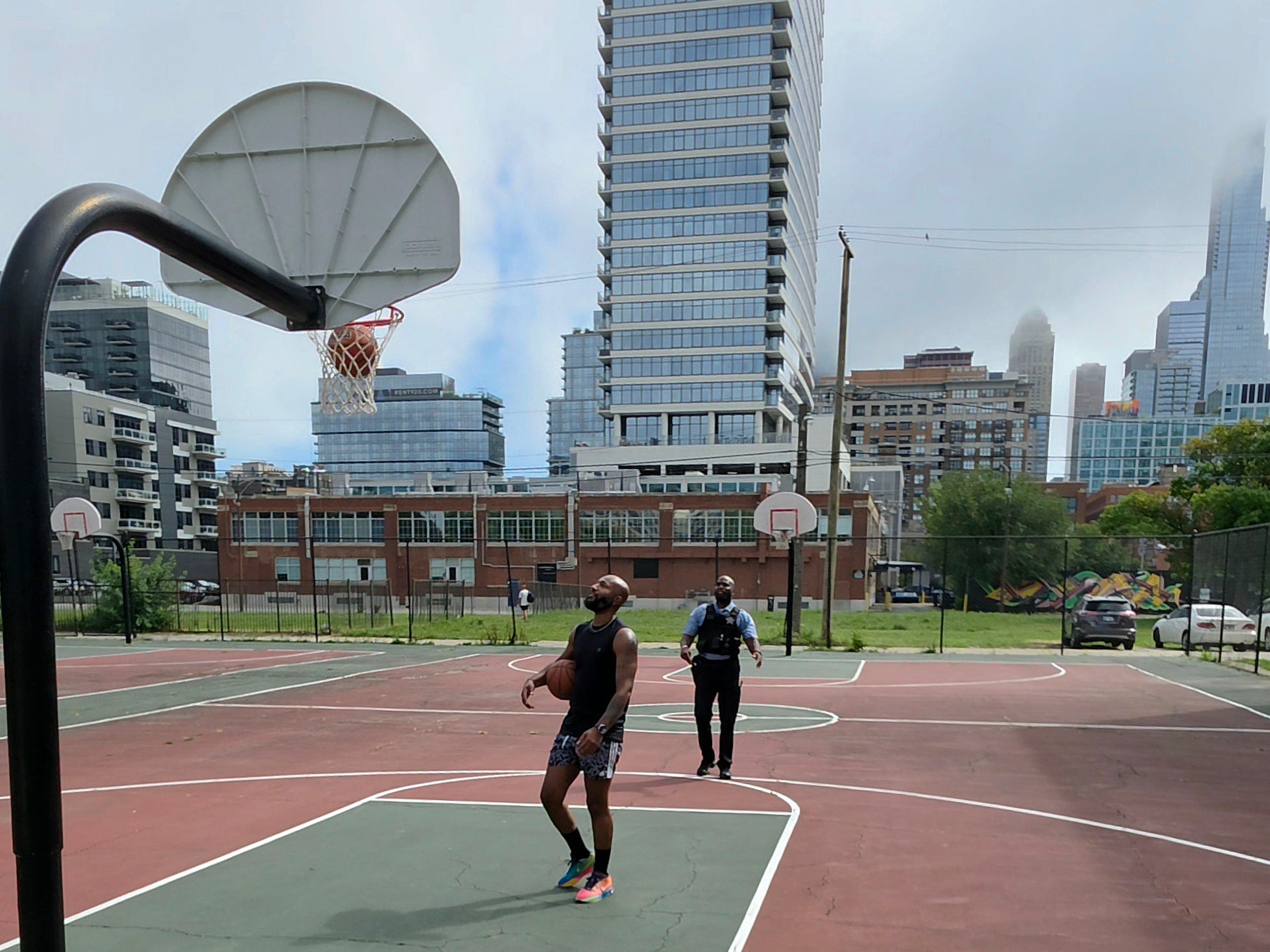
I was a little reserved in our first game. I couldn’t see past the tactical vest and the gun attached to his waist. But this cop, whom I later learned is named Calhoun, was different from most other cops I’ve encountered because he looks like me. He talks like me — or at least like the older Black men from where I grew up. He talked shit like them too! By the second game, I was no longer playing H.O.R.S.E. with a cop — I was playing it with a fellow Black man who happened to be dressed like a cop. A fellow Black man who happened to be playing the role of a cop. And it suddenly dawned on me that, if a few choices in my past had gone a different way, I may be playing that same role.
We love to imagine that will is totally free and that any of us could choose to do anything we’d like at any point in time and there’s nothing to stop us except our own willpower. But this is demonstrably false. If it were true, we’d all will ourselves rich and never have to work again. What’s much more likely is that we are sort of guided down a river over which we have very little control. On this, there may be a degree of agency where we can float closer to one bank or another — but for the most part, most of us stick to the course that was laid out for us. Many of us gravitate toward roles that mirror the roles our family held during our formative years.
I actually got the whole encounter between Calhoun and I on video! You can check out a reel I stitched together below. If the embed isn’t showing. try clicking here.
It’s easy to assume that Calhoun is just some power-hungry freak who intentionally chose being a cop because he loves to exploit and dominate people. But I’m willing to bet that there’s something more mundane behind his alignment with this role. Maybe he comes from a lineage of police officers. Maybe he had a positive experience with one growing up and wanted to be one when he grew up too. Maybe he wants to be a positive influence in his community and this was the best route he could see to become that. Or maybe, just maybe, being a cop was one of the best, if not the best, options he could find for a decent-paying job in this economy.
Of course you, or I, could judge any of those reasons as being invalid — but would that make us correct? Have you never had to play a role that you didn’t like or align with on every level out of necessity? I have. Now, I still couldn’t see myself ever becoming a cop in this life — but that’s only because my life has not elevated that role as something I should aspire to be. But what I can say is that I saw myself in Calhoun and, through that reflection, I gained a bit more compassion for him and everyone who has to play roles that grant them a disproportionate amount of power over others — like parents.
The Parent Trap
My father and I had a big falling out when I was 17. One that would lead to us not speaking to each other for seven or eight years. He said a lot of hurtful things to me that night and one thing that was more true than painful. He said, “you think you’re so much better than me.” And he was right — I definitely did think that I was better than him. I mean, respectfully, it wasn’t a high bar to clear. But also, why was that a problem? I mean, as a parent, you would want your kid to turn out better than you in every way, right? Perhaps for most mature parents, this is true. But my father could only see me through the lens of his own identity. And since he was “the man” in his own mind — his ego couldn’t handle the idea of someone being superior to him. Not even his own child.
This is a narcissistic trait that I truly feel many, if not most, parents have to some degree. It’s because, similar to cops, the role of parent gives one a disproportionate amount of power over other people’s lives. And I truly feel that many people seek out parenthood not to gain someone to love, lead, and guide toward a better place than they’ve been able to reach themselves but to have someone to mold into the version of themselves they wish they could’ve been. The child becomes a way to bolster the parent’s own sense of purpose and identity. Because of this, many parents don’t see their children as much more than objects they possess. Objects whose fate they decide. Objects they’d discard if they ever stood up for themselves — something that many police officers also unfortunately resort to when they feel like their power isn’t being respected.
The Narcissist/Empath Dynamic

Just as much as the narcissist needs to become more empathetic, the empath needs to become more selfish, and that explains why they find each other so attractive .
Neither of my parents had the emotional maturity to truly accept their kids being greater than themselves — so they tried to hold me back in different ways. But my mother’s method wasn’t as overt. Instead, she tried her best to hold me in a struggle mindset. My mother was in survival mode my entire life. I genuinely don’t feel like she didn’t want me to be greater than her from an ego standpoint. Rather, it’s just that struggle is all she knew. It’s all our family knew. So she couldn’t imagine a future where her children didn’t have to struggle too. This was made evident when I was up for a scholarship back in high school. A full-ride.
The awards day on which the winner would be announced fell on the same day and time as my little brother’s awards day at his elementary school. My mother had already decided that I wasn’t going to win the scholarship and that “I’ll just have to work my way through college” — so she went to little bro’s awards day instead of mine. But then I won the scholarship with no one from my family there to celebrate with me. When I told her after the fact, it was met with a sort of “good for you,” which seemed totally inappropriate for such a life-changing blessing. In hindsight, I think she just had too much parental pride to admit that she was wrong. Perhaps it even scared her a bit that her son was embarking down a path that she was totally unfamiliar with. That she was unequipped to assist with. So it wasn’t that she didn’t want me to succeed — it’s that my success threatened her identity as a parent.
And this is the danger of roles in general — they prevent us from seeing ourselves or others clearly. Being so attached to the “mother” role made it difficult for my mother to see me as anything other than her child. A child she couldn’t relate to. A child who often didn’t deserve privacy or respect. A child who didn’t deserve boundaries. Because of this, when I grew up and was able to move away, I rarely came home. Something I later learned hurt her deeply — but she didn’t realize it was her behavior that pushed me away. Behavior informed by the adoption of the role of “mother.”
Similarly, I could have turned down Calhoun the cop’s offer to play H.O.R.S.E. because I don’t agree with the role he’s currently playing in society. Doing so may have stroked my ego. It may have reinforced my own mental role of being “anti-establishment” but it would have undermined a role that is much more important to me: the role of being human and helping other humans realize that we always have more in common than we have differences.
At the end of our lives, we’ll all have to drop the roles we’ve been wearing throughout them. The roles that brought our egos comfort and purpose. The roles that gave meaning to our days. In those final days, we’ll all be naked and we’ll have to reconcile with who remains when we no longer have a costume to tell us who we are. So I say, why not start practicing for that inevitability now? In your interactions with others, especially those whose role you don’t like, try to remember that every person is born into this world effectively a blank slate that is etched according to circumstances that are largely outside of their control. Try to remember that every person is just looking for a purpose — a way to make their life more coherent.
Unfortunately, many of our purposes will be in conflict with one another but that doesn’t have to make us enemies. We are actors in a play none of us can truly claim to be directing. Ram Dass said, “Treat everyone you meet as if they’re God in drag” — because they are. And what makes us spiritually mature is seeing others as they truly are, not only as they present themselves to be.
are we clear?
Thanks for reading! If this resonated with you in some way, I’d love to hear about it in the comments.
And if you feel like questioning yourself a little more, check out Questionable (Morals), an app I’m building. It’s a moral dilemma quiz with no right answers that lets you see, in real time, how your choices compare with everyone else’s.