


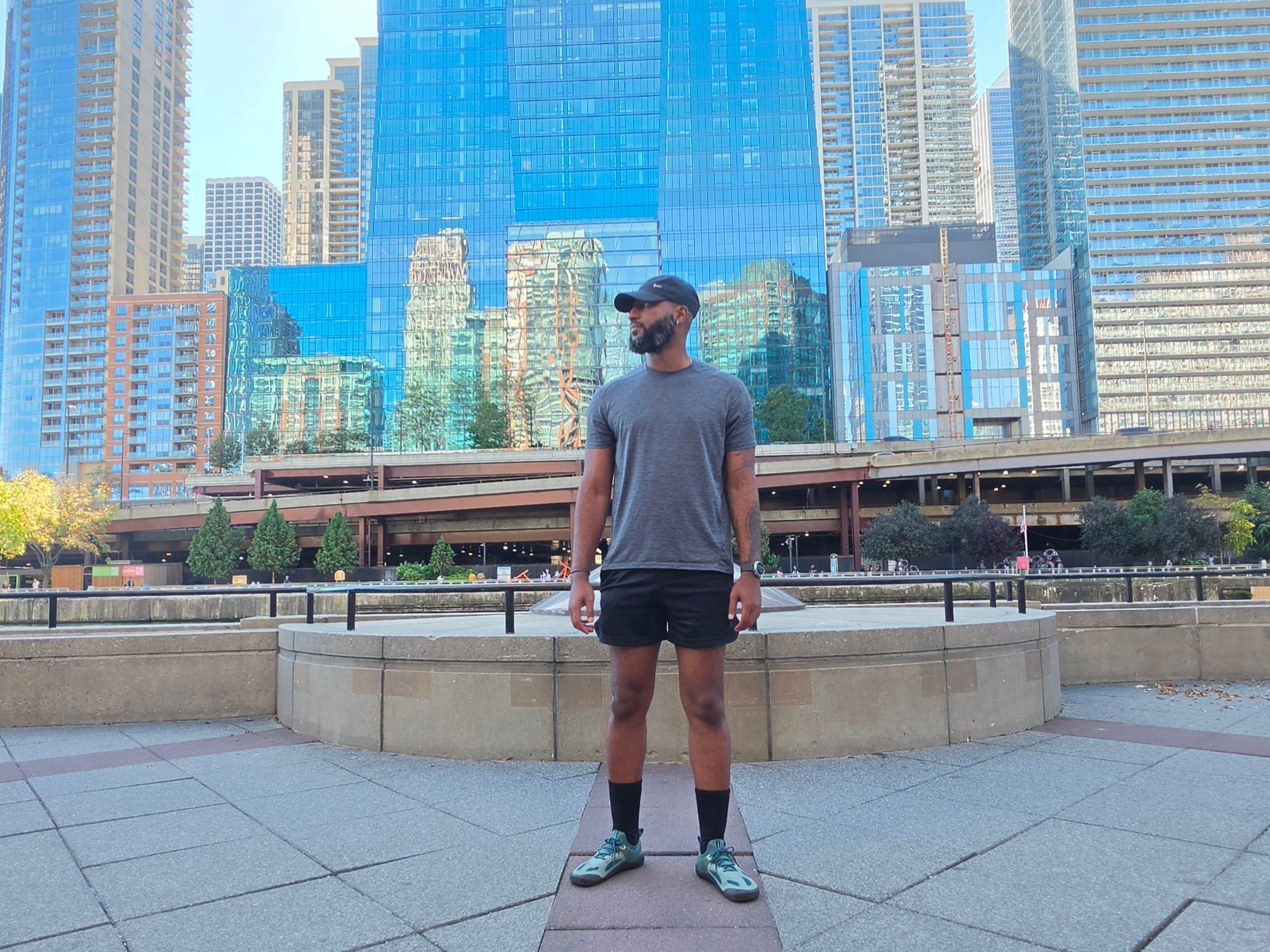
Look at that boy with the Daisy Dukes on
Do I look gay or straight?
Asking because earlier this summer I was out for a walk in Chicago wearing exactly what I am in this photo. I was crossing the street when a guy in a car stopped at the light yelled out to me,
“Hey man, is your dad a boxer?”
I have pretty broad shoulders, so I figured maybe he just thought I had a boxer’s frame. I look back, and before I can even get “nah” fully out of my mouth, he cuts in:
“Cuz you’re a knockout!”
First of all, A+ pickup line. Second of all, while flattered, I’m not remotely interested, so I laugh and keep walking.
It was weird because I’m secure enough in my sexuality that a man finding me attractive doesn’t bother me. What was bothering me was that there’s apparently something about me that says I’m open to being approached by men.
And I’m not. At least, not in that way.
It would be different if this were an isolated incident, but it’s happened twice more since then — and that’s just in Chicago.
These experiences didn’t make me question my sexuality, but they did make me question my masculinity because, as I discovered, part of my inner-masculine doctrine stated that gay men shouldn’t perceive me as available to them. Yet they were.
It genuinely got to the point where I started questioning my outfit before I left the house and it’s not lost on me that women experience some version of this every day. These interactions have forced me to put myself in their shoes in a way I hadn’t before. But I don’t think my discomfort comes from being afraid that a man could overpower me. It comes from a deeper aversion to intimacy with men in general.
I’ve never really experienced what it feels like to be cared for by a man, and I think part of that aversion is rooted in the fact that so many men are emotionally closeted.
Men feel deeply. We’re just often taught to hide it, deny it, or convert it into something more acceptable — anger, ambition, humor.
And it’s that emotional inauthenticity that can make men dangerous.
I really think it’s men’s own emotional underdevelopment that makes us unappealing not only to women, but often to each other. This is why the “male loneliness epidemic” will require more than company.
It will also require us men emotionally returning to ourselves.
Straight Male Jail
There’s this strong feminine energy in me that I think many people sense, but it isn’t really apparent physically. What I mean is, besides my affinity for short shorts, there’s not too much about me that reads “feminine,” in my opinion. I’m the furthest thing from a metrosexual. Don’t get me wrong, hygiene is important to me, but I rarely go beyond the basics. I once let an ex-girlfriend paint one of my nails and hated how it felt both psychologically and physically. And that’s not to say there’s anything wrong with a man expressing himself in that way, if he’d like, it’s just not for me.
I resonate much more deeply with inward expressions of femininity. Deep sensitivity, receptivity, empathy, care, affection, flow — all words that describe me well and all words that would typically be associated with femininity.
There are some traditionally feminine outward expressions that I do indulge in as well. Namely loving purples and pinks, flowers, and cheetah print — being emotionally expressive — and yeah, wearing shorts that are on the shorter side.
Of course what we wear is a social signal — that’s a large part of why people wear wedding rings — but to me, the length of a person’s shorts isn’t enough information to discern who they’re interested in sexually.
Cultural context matters here as well.
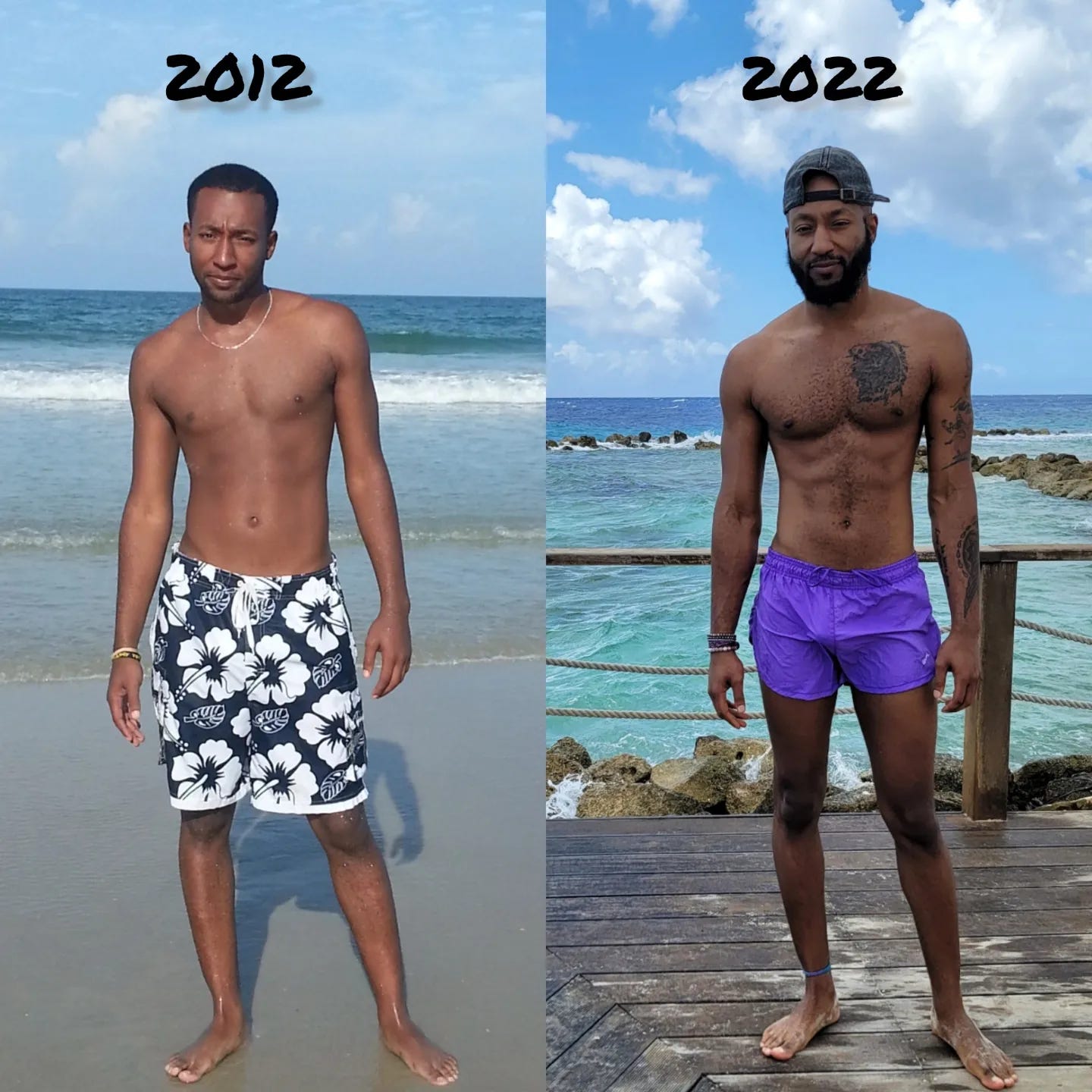
I often see presumably straight White men wearing tiny running shorts all the time and, to my knowledge, no one seriously questions their sexuality. But put a Black man in shorts above a certain length and suddenly people start doing detective work.
There are rules to Blackness too. We even joke about having your “Black card” revoked when you break one of them. And, apparently, somewhere in the Black male bylaws there’s a subsection specifying the acceptable amount of thigh a straight man can show before questions need to be asked.
A while ago there was this viral trend of influencers going around asking men whether they were gay or straight. After they answered, they were asked to judge the orientation of the man who was interviewed before them.
Nine times out of ten, the exchange basically went:
“I’m straight.”
“Him? He’s definitely gay.”

What interested me wasn’t whether they were actually guessing correctly. It was how eager these men seemed to distance themselves from the man before them.
So much of straight male masculinity is competitive and comparative. It isn’t enough to feel like a man — a lot of men need to feel like more of a man than the next man.
And because anything associated with femininity is still treated as inferior within traditional masculinity, calling the next man “gay” gives you an easy way to put him beneath you in your own mind.
This is what I like to call straight male jail.
It’s this invisible cage that tells you what is and isn’t acceptable for a man in your position. What you can wear. How you can talk. What you can enjoy. How much affection you can show. How deeply you can feel. How close you can get to another man. Deviate too far and you run the risk of having your masculinity revoked. And that’s just not a risk many men are willing to take.
I suspect some of what presents itself as homophobia is actually envy. Not necessarily envy of gay men for being gay, but envy that some men seem freer to express themselves authentically than you feel permitted to.
There’s something ironic about believing your version of masculinity makes you superior while simultaneously being imprisoned by it — and I think some straight men’s obsession with diminishing gay men is a projection of that fact.

Most of us straight men contribute, knowingly or unknowingly, to a collective conspiracy to stay emotionally small. And part of what makes that so difficult to challenge is that emotional repression can preserve power.
The more disconnected we are from our own vulnerability, the easier it becomes to ignore the vulnerability of women and other marginalized people. Not necessarily because men are consciously thinking, compassion will cost me power, but because truly seeing other people tends to make domination harder to justify.
Wanting to maintain your position of privilege is human. Life is challenging and we’re all constantly looking for whatever advantage we can to make our lives more stable and secure. Unfortunately, that often looks like taking advantage of, exploiting, or simply ignoring the plights of other people.
And that’s part of what makes institutions like patriarchy, homophobia, White supremacy and, dare I say, even the cultural institution of “Blackness” and some of its restrictions so insidious. They’re not truly rooted primarily in hatred of other. They’re rooted in preservation of self.
But survival of self without consciousness inevitably evolves into the harm of others.
So, it’s tragically poetic that one of the strongest markers of survival is companionship. Men knowingly or unknowingly reject intimacy in order to secure their own lives, but this ironically makes us more vulnerable to death.
Men have a much higher suicide rate than women, and that alone should be enough to make us question what our version of masculinity is costing us. You’d think it would inspire men to drop their walls and let people get close to them emotionally.
The problem is, emotional pain often feels like a much bigger threat to men than physical pain. Masculinity frequently teaches us that physical destruction is more honorable than emotional exposure.
So we spend a lifetime allowing ourselves to die inwardly — and of course the consequences of that neglect don’t remain inside us. They get projected outward onto our relationships, our families, our communities, and the society we claim we’re supposed to protect.
And that’s, in part, why advances made by men can feel so threatening.
The act of someone hitting on you isn’t inherently dangerous.
The danger is not knowing whether they have the emotional maturity to handle rejection without becoming aggressive — because emotional repression makes that response much harder to predict.
Scared of my own reflection
When I think back to those men who approached me, I don’t think what made me uncomfortable was simply that they were gay, or even what them finding me attractive might imply about me.
I think part of me was responding to something much broader:
They were men.
And I know men.
I know how deeply we can feel while pretending we don’t feel anything at all. I know how quickly rejection can become humiliation, humiliation can become anger, and anger can become violence when a man has never learned a healthy alternative for expressing it.
I know that for many men — gay or straight — masculinity is deeply tied to the ability to get what we want. So, if I’m what you want, and the feeling isn’t mutual, then your advance is going to feel like a threat.

And maybe that’s the part that has helped me understand women differently.
I once said that a woman hating men, yet wanting to be in a relationship with one, is an incoherent position. And I stand by that.
But since making that statement, I’ve also recognized that for many women, what gets expressed as hatred of men is really hatred of patriarchy — hatred of toxic expressions of masculinity — because both often create a dangerous environment for them to exist within.
Yet, we have to be willing and able to separate the human from what has conditioned them. I know that’s hard, and often dangerous, but the alternative is to continue to destroy each other over wounds and systems none of us created alone.
And the best thing we can all do to make interactions with men feel less threatening is to regularly remind them that being fully human is far superior to merely being a man.
are we clear?
Thanks for reading! If this resonated with you in some way, I’d love to hear about it in the comments.
And if you feel like questioning yourself a little more, check out Questionable (Morals), an app I’m building. It’s a moral dilemma quiz with no right answers that lets you see, in real time, how your choices compare with everyone else’s.